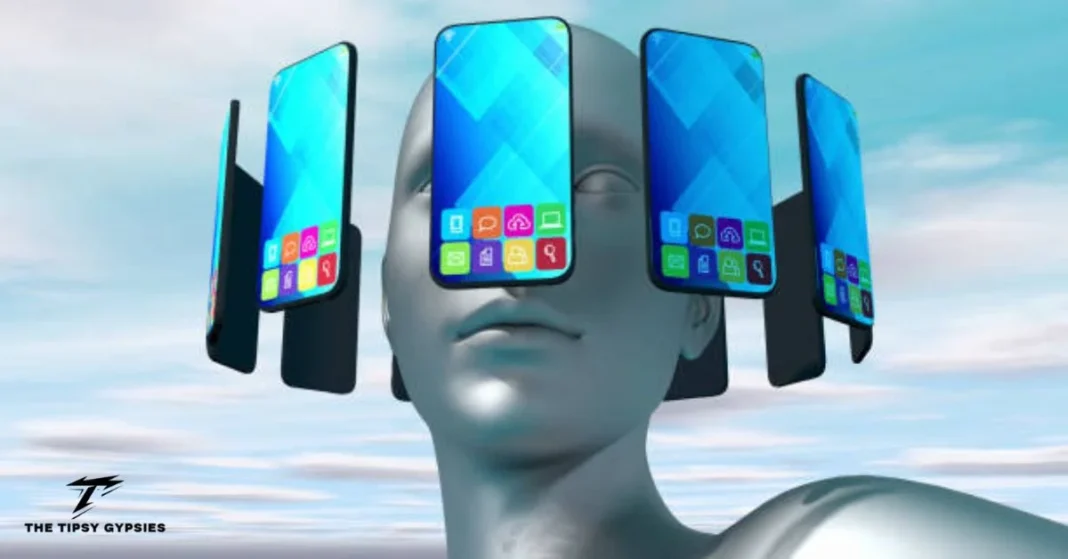

For over a decade, the smartphone has been our loyal companion. It’s our connection to the world, our primary camera, our entertainment hub, and for many, the most powerful computer they own. These rectangular slabs of glass and metal have fundamentally changed how we live, work, and communicate. But what comes next? The very companies that put these powerful devices in our pockets are already looking past them. The reality is that tech giants envision future beyond smartphones, and that future is closer than you might think. They are pioneering new technologies that promise to weave the digital world into our lives in ways that are more seamless, intuitive, and personal. From glasses that overlay information onto our view to interfaces that connect directly with our minds, the next chapter of personal technology is being written right now.
This article will explore this exciting new frontier. We’ll look at the current dominance of smartphones and why the biggest names in tech are looking for the next big thing. We’ll dive into the groundbreaking technologies like augmented reality, artificial intelligence, and brain-computer interfaces that are leading the charge. You will get a clear picture of what the post-smartphone world might look like and how it could change our daily lives forever.
Key Takeaways
- The smartphone market is reaching its peak, prompting tech companies to explore new forms of personal computing.
- Emerging technologies like Augmented Reality (AR), Virtual Reality (VR), Artificial Intelligence (AI), the Internet of Things (IoT), and Brain-Computer Interfaces (BCIs) are the core of this new vision.
- Major players like Apple, Google, Meta, and Microsoft are investing billions into developing post-smartphone devices, from smart glasses to immersive environments.
- This shift will bring significant societal changes, impacting everything from communication and work to entertainment and daily routines.
- Significant challenges remain, including privacy concerns, technological limitations, cost, and ensuring user acceptance.
The Reign of the Smartphone: A Double-Edged Sword
It’s difficult to overstate the smartphone’s impact. Since the launch of the first iPhone, these devices have become deeply woven into the fabric of modern society. They serve as our primary tools for communication, keeping us connected to friends, family, and colleagues through calls, texts, and social media. The convenience is undeniable; with a few taps, we can order food, manage our finances, navigate a new city, or access a nearly infinite library of information. For many people around the globe, a smartphone isn’t just a phone—it’s their only computer, their link to education, and their gateway to the digital economy.
However, this dominance has come with a downside. The innovation that once felt revolutionary now feels incremental. Year after year, new models offer slightly better cameras, faster processors, and longer battery life, but the fundamental design and user experience remain largely unchanged. This stagnation has led to market saturation, where most people who want a smartphone already have a good one. At the same time, a sense of “screen fatigue” is growing. People are becoming more aware of the downsides of being constantly tethered to a device, from endless notifications to the pressure of maintaining a digital presence. This is why tech giants envision future beyond smartphones—they see an opportunity to create a more natural and less intrusive way to interact with technology.
The Next Wave: Technologies Shaping Our Future
The push beyond the smartphone isn’t about a single device; it’s about an ecosystem of interconnected technologies. These innovations aim to make our digital interactions more immersive, intuitive, and integrated into our physical world.
Augmented Reality (AR) and Virtual Reality (VR)
AR and VR are two of the most promising candidates to succeed the smartphone. While often mentioned together, they offer distinct experiences.
- Augmented Reality (AR): This technology overlays digital information onto your view of the real world. Imagine getting walking directions that appear as arrows on the sidewalk in front of you or seeing product information hover over an item on a store shelf. Companies like Meta, with its Ray-Ban smart glasses, and Apple, with its Vision Pro headset, are heavily invested in making AR a part of daily life. The goal is a hands-free experience where information is available right when and where you need it.
- Virtual Reality (VR): VR, on the other hand, creates a completely immersive digital environment, shutting out the physical world. It has the power to transport you to a different place, whether for a virtual meeting, an immersive game, or a training simulation. VR promises to redefine social interaction and entertainment, creating shared digital spaces where people can connect regardless of physical distance.
The Power of Artificial Intelligence (AI) and Machine Learning (ML)
Artificial Intelligence is the engine that will power the post-smartphone era. AI and its subset, Machine Learning, allow devices to learn, reason, and act in ways that mimic human intelligence. Instead of you needing to find information, AI-powered assistants will anticipate your needs and deliver it proactively. This concept is often called “ambient computing,” where technology works in the background, always ready to assist without demanding your constant attention. We see early versions of this with voice assistants like Siri and Alexa, but the future is much more ambitious. OpenAI, the company behind ChatGPT, is rumored to be working on a dedicated AI hardware device, showing how central AI is to the vision of what comes next.
The Internet of Things (IoT)
The Internet of Things refers to the vast network of physical objects embedded with sensors, software, and other technologies that allow them to connect and exchange data over the internet. This includes everything from smart home devices like thermostats and lightbulbs to wearables like fitness trackers and smartwatches. In a post-smartphone world, the IoT will create a seamless web of connected devices that communicate with each other to make your life easier. Your car could tell your home’s thermostat you’re on your way, ensuring the temperature is perfect when you arrive. This interconnectedness is a key reason why tech giants envision future beyond smartphones as the central controller, moving towards a more decentralized and intelligent environment.
Brain-Computer Interfaces (BCIs): The Final Frontier?
Perhaps the most futuristic technology on the horizon is the Brain-Computer Interface, or BCI. Companies like Elon Musk’s Neuralink are developing ways to connect the human brain directly to a computer. While still in the very early stages of research, the potential is staggering. In the near term, BCIs could help people with paralysis regain movement or communication. Looking further ahead, BCIs could enable thought-based interaction with technology, allowing you to control devices or access information simply by thinking. This represents the ultimate step in making technology an extension of ourselves, but it also raises profound ethical and privacy questions that society will need to address carefully.
Meet the Architects of Tomorrow
The world’s leading technology companies are in a race to define the post-smartphone era. Each has a unique strategy, but they all share the same goal: to create the next dominant computing platform.
Major Players and Their Strategies
|
Company |
Key Technologies |
Primary Focus |
Vision for the Future |
|---|---|---|---|
|
Meta |
AR Glasses, VR Headsets, AI |
Consumer Wearables, The Metaverse |
A future where people interact in shared virtual spaces for work, socializing, and entertainment, primarily through AR and VR devices. |
|
Apple |
Spatial Computing, AR/VR, AI |
Seamless Ecosystem Integration |
Extending its tightly integrated ecosystem of devices to include spatial computers like the Vision Pro and future AR glasses. |
|
|
AR, AI, Ambient Computing |
Open Ecosystem, Real-Time Information |
Creating an open platform (like Android XR) for AR devices and using AI to provide contextual, real-time information and translation. |
|
Microsoft |
Mixed Reality, AI, Cloud Computing |
Enterprise and Professional Solutions |
Focusing on mixed reality for business, training, and collaboration with its HoloLens platform, powered by Azure cloud services. |
|
Neuralink |
Brain-Computer Interfaces (BCI) |
Medical Applications, Cognitive Augmentation |
Initially focused on restoring function for patients, with a long-term goal of enabling direct thought-based interaction with technology. |
|
OpenAI |
Ambient AI, Robotics |
Context-Aware AI Systems |
Embedding AI directly into the environment through dedicated hardware and software to provide proactive and predictive assistance. |
As this table shows, the effort is broad and well-funded. For example, Meta has invested over $50 billion into its Reality Labs division, demonstrating a serious commitment to building the metaverse. Similarly, Apple’s launch of the Vision Pro, despite its high price, signals a clear intent to lead in the new field of spatial computing. The fact that all these tech giants envision future beyond smartphones in such a significant way indicates a fundamental shift in the industry.
The Impact on Society and Our Daily Lives
The transition away from smartphones will change more than just the devices we carry. It will fundamentally alter how we interact with the world and each other.
A World of Seamless Information
Imagine walking down the street and seeing the history of a building appear as you look at it, or having a recipe’s steps projected onto your countertop as you cook. This is the promise of AR—a world where digital information is contextually integrated into our physical environment. This could revolutionize education, making learning more interactive and engaging. It could also transform industries like retail, healthcare, and manufacturing by providing workers with hands-free information and guidance.
Redefining Social Connection
While some worry that new technologies could further isolate us, they also hold the potential to bring us closer together. VR could allow families separated by distance to feel like they’re in the same room, sharing experiences in a virtual space. For many, these technologies offer new avenues for connection and community, especially for those with mobility issues or social anxiety. Companies like Meta are betting that these virtual interactions will become a major part of our social lives.
The Future of Work and Productivity
The workplace is another area ripe for transformation. Mixed reality devices like Microsoft’s HoloLens are already being used for remote collaboration, allowing engineers in different parts of the world to work on the same 3D model. AI assistants could automate tedious tasks, freeing up human workers to focus on more creative and strategic challenges. This shift could lead to more flexible work arrangements and increased efficiency across many industries. As you can see, the ways in which tech giants envision future beyond smartphones will have a ripple effect on every aspect of our lives.
Hurdles on the Horizon: Challenges and Concerns
The road to a post-smartphone future is not without its obstacles. Several significant challenges must be overcome before these technologies can achieve widespread adoption.
- Privacy and Security: Devices that are always listening, always watching, and potentially even reading our thoughts raise major privacy concerns. Who owns the data these devices collect? How will it be protected from hackers or misuse? Establishing strong ethical guidelines and robust security protocols will be absolutely critical to building public trust.
- Technological Limitations: The hardware still has a long way to go. Current AR glasses and VR headsets are often bulky, have limited battery life, and can be expensive. For these devices to replace the smartphone, they need to be lightweight, comfortable to wear all day, and affordable for the average consumer.
- Social Acceptance: Will people be comfortable wearing smart glasses in public? The failure of the original Google Glass, partly due to social backlash against its camera, serves as a cautionary tale. New devices will need to be stylish and socially acceptable to avoid a similar fate.
- Cost and Accessibility: The first generation of these new technologies, like the Apple Vision Pro, comes with a very high price tag. Making these devices accessible to everyone, not just wealthy early adopters, will be essential for them to have a truly global impact.
Conclusion: A New Dawn for Personal Technology
The smartphone isn’t going to disappear overnight. For the near future, it will remain the central hub of our digital lives. However, the ground is shifting. The incredible investments and rapid innovation from the world’s leading technology companies make one thing clear: the era of the smartphone as the undisputed king of tech is coming to an end. The work these tech giants envision future beyond smartphones is laying the foundation for a world where technology is more personal, intuitive, and seamlessly integrated into our reality.
This next wave of computing—whether it’s through augmented reality glasses, intelligent AI companions, or even brain-computer interfaces—promises to be even more transformative than the smartphone revolution. It offers a future where we spend less time staring at screens and more time engaged with the world around us, with technology acting as a helpful guide in the background. While significant challenges related to privacy, cost, and social acceptance remain, the journey has begun. Exploring this topic further, you can find a wealth of information on the history and development of these next-generation concepts, such as the idea of the Metaverse, which is a core component of this future vision promoted by companies like Meta. We are on the cusp of a new and exciting chapter in our relationship with technology.
Frequently Asked Questions (FAQ)
Q1: What does the post-smartphone era mean for daily life?
The post-smartphone era points to a future where we rely less on handheld screens and more on immersive, context-aware technologies like AR glasses, AI assistants, and other wearables. This will make digital interactions more seamless and integrated into our daily routines, providing information and assistance without requiring us to pull out a device.
Q2: Which companies are leading the post-smartphone revolution?
Major tech companies like Apple, Meta, Google, Microsoft, and OpenAI are at the forefront of this shift. They are investing heavily in AR, VR, AI, and spatial computing to develop the next generation of personal devices and platforms.
Q3: What are the key technologies that might replace smartphones?
The leading candidates include Augmented Reality (AR) glasses, which overlay digital info on the real world; ambient AI systems that anticipate user needs; and eventually, Brain-Computer Interfaces (BCIs) that could allow for thought-based control of technology.
Q4: What are the main obstacles to a post-smartphone world?
The biggest challenges include significant privacy and security concerns, current technological limitations (like battery life and device weight), high costs that limit accessibility, and the need for broad social acceptance of new types of wearable devices.
Q5: When can we expect post-smartphone technologies to become mainstream?
Early adoption of some technologies, like AR glasses and advanced AI assistants, is expected between 2025 and 2030. Widespread, mainstream adoption is more likely to occur between 2030 and 2035, as the technology becomes more refined, affordable, and user-friendly.