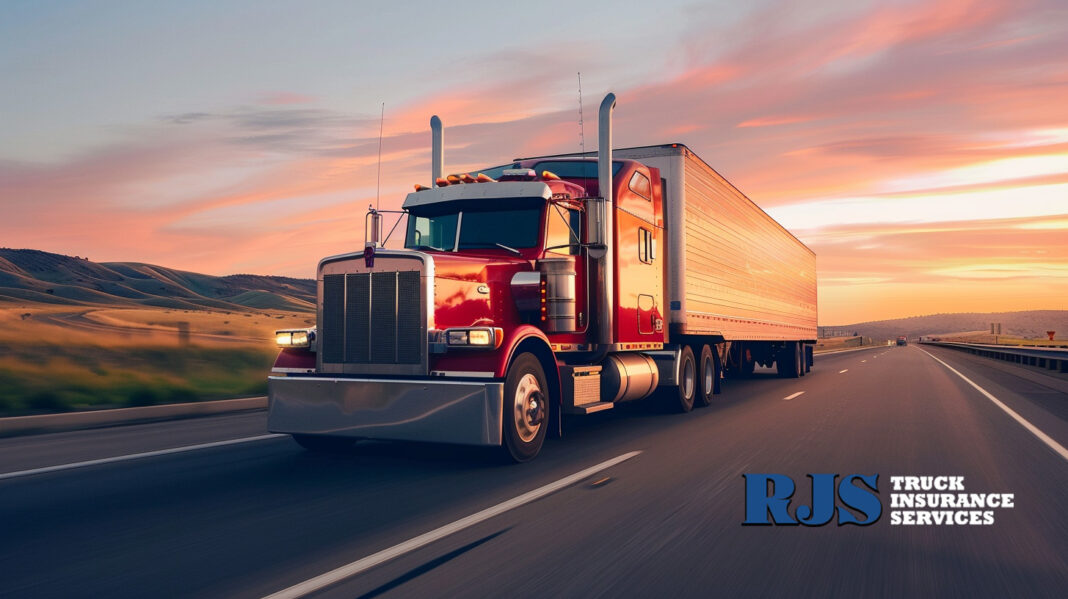

The Ultimate Guide to Understanding Tag Coverage for Commercial Vehicles
In the world of commercial trucking and logistics, there are hundreds of terms thrown around daily. From “bobtailing” to “deadheading,” it can feel like you need a dictionary just to understand your daily operations. However, one term stands out because of its direct impact on your legal standing and your financial safety: tag coverage. If you are an owner-operator or manage a small fleet, understanding this concept isn’t just a good idea; it is absolutely critical for your survival in the industry.
Many people assume that if they have insurance on their truck, they are completely protected against any incident on the road. Unfortunately, that is not always the case. Insurance policies are notoriously specific, and gaps in your protection can lead to devastating lawsuits or financial losses. This guide is designed to walk you through every aspect of this specific type of liability extension, ensuring that you can drive with confidence. We will break down complex insurance jargon into plain English so you can make the best decisions for your business.
Key Takeaways
- tag coverage extends liability protection from a power unit to the trailer it is towing.
- Driving without proper coverage for your trailer can lead to significant legal penalties and financial ruin.
- Understanding the difference between “hired auto” and “non-owned” coverage is essential for proper protection.
- Insurance premiums vary based on your location, driving history, and the value of your assets.
What Is Tag Coverage and Why Do You Need It?
To put it simply, tag coverage is a term often used in the insurance industry to describe the extension of liability insurance to a trailer that is being pulled by an insured vehicle. When you drive a big rig, you have the “power unit” (the truck itself) and the trailer. The truck usually has its own robust insurance policy. However, the moment you hitch a trailer to that truck, that trailer becomes a liability risk. If you swing wide and the trailer hits a parked car, your truck didn’t cause the damage—the trailer did. Without the right coverage in place, you could be personally liable for those damages.
Why do you need it? The answer lies in the unpredictable nature of the road. Even the most experienced drivers cannot control every variable. A sudden gust of wind, a patch of black ice, or a distracted driver in another lane can lead to an accident involving your trailer. If your insurance policy does not explicitly include tag coverage or liability extension for the trailer you are hauling, your insurance company might deny the claim. This leaves you paying out of pocket for repairs, medical bills, and legal fees, which can easily run into the hundreds of thousands of dollars.
Understanding How Commercial Auto Policies Work
Commercial auto policies are like a puzzle; you need all the pieces to see the full picture. A standard policy typically covers bodily injury and property damage caused by the truck itself. However, the definition of “insured auto” is where things get tricky. Some policies automatically cover any trailer attached to the insured power unit, while others require the trailer to be specifically listed or “scheduled” on the policy. This is where the confusion often begins for new owner-operators who assume “full coverage” means everything is covered no matter what.
When we talk about tag coverage, we are essentially talking about closing a loophole. In many jurisdictions, the law requires that every vehicle on the road, including trailers (which have their own tags or license plates), must have liability coverage. Since a trailer cannot move on its own, it borrows the liability coverage of the truck pulling it. However, this “borrowing” process isn’t always automatic. You need to verify that your specific commercial policy includes provisions for the specific type of trailer you are hauling, whether it is a dry van, a flatbed, or a reefer.
The Relationship Between Power Units and Trailers
The dynamic between a power unit and a trailer is like a partnership. The truck provides the muscle, and the trailer carries the load. In legal terms, they are often treated as separate entities that become one unit when connected. This separation is vital to understand because they are registered separately. Your truck has a VIN and a license plate, and your trailer has a different VIN and a different license plate. Because they are legally distinct assets, they often require distinct attention in your insurance paperwork to ensure seamless protection.
This relationship becomes complicated when you are hauling a trailer you do not own. This is common in “power-only” dispatching, where an owner-operator uses their truck to move a trailer owned by a logistics company or a shipper. In this scenario, whose insurance pays if the trailer causes an accident? This is the exact scenario where tag coverage becomes the hero of the story. It ensures that the liability coverage from your truck extends to cover the non-owned trailer while it is in your possession, protecting you from claims by the trailer owner or third parties.
Who Needs Tag Coverage the Most?
While almost anyone towing a trailer needs some form of liability extension, certain groups are at much higher risk than others. Independent owner-operators are at the top of this list. Unlike large mega-carriers that have blanket insurance policies covering thousands of assets, an independent driver is responsible for their own specific policy limits. If you are an independent contractor hauling different trailers for different clients, you are the prime candidate for needing verified tag coverage.
Another group that critically needs this protection involves businesses that utilize “interchange agreements.” A trailer interchange agreement is a contract that transfers the responsibility of a trailer from one carrier to another. If you sign an interchange agreement, you are legally accepting responsibility for that trailer. Without proper coverage, you are essentially signing a contract that puts your entire business at risk. Additionally, companies that lease trailers on a short-term basis during peak seasons (like the holidays) must ensure their temporary assets are fully covered under their existing liability umbrella.
The Risks of Driving Without Proper Coverage
The risks of operating without adequate tag coverage are terrifyingly real. The most immediate consequence is financial devastation. In a serious accident involving a commercial truck, damages can easily exceed $1,000,000. If your insurance carrier denies the claim because the trailer was not covered, the injured party will sue you directly. This can lead to the seizure of your business assets, your personal savings, and even your future earnings. Bankruptcy is a common outcome for small trucking businesses that overlook this detail.
Beyond the money, there are legal and regulatory risks. The Department of Transportation (DOT) and the Federal Motor Carrier Safety Administration (FMCSA) have strict rules regarding financial responsibility. If you are caught operating without proper insurance for the equipment you are hauling, you can face severe fines, the suspension of your operating authority (MC number), and your truck could be placed out of service. This stops your revenue stream instantly. Furthermore, a history of insurance violations makes it incredibly difficult and expensive to get insured in the future.
Breaking Down the Costs of Insurance
Insurance costs are rising across the board, and understanding what drives these costs can help you budget better. The price of adding or ensuring tag coverage is usually a fraction of your total premium, but it is not free. Insurers calculate risk based on what you are hauling and how far you are going. If you are hauling hazardous materials or high-value electronics, your premiums will be higher than if you are hauling lumber. The type of trailer matters, too; a refrigerated trailer (reefer) is more expensive to insure than a simple flatbed because the reefer unit itself is complex and costly.
Several factors influence the final price tag of your policy. Your driving record (MVR) is the biggest factor. A clean record suggests you are a low-risk driver, which keeps costs down. Your credit score can also play a role in how insurance underwriters view your financial stability. Additionally, the radius of your operation impacts the cost. Drivers who stay within a 100-mile radius often pay less than long-haul truckers who cross state lines, simply because more time on the road equals more exposure to risk.
Estimated Insurance Cost Breakdown (Annual)
| Coverage Type | Estimated Annual Cost | Purpose |
|---|---|---|
| Primary Liability | $5,000 – $12,000 | Covers damage to others |
| Physical Damage | $1,000 – $3,000 | Covers your truck |
| Tag Coverage (extension) | Included or $100 – $500 | Extends liability to trailer |
| Cargo Insurance | $400 – $1,800 | Protects the freight inside |
| Non-Trucking Liability | $300 – $600 | Protection when off-duty |
How Tag Coverage Differs from Comprehensive Insurance
It is easy to confuse different types of insurance, so let’s clarify the difference between tag coverage (liability extension) and comprehensive/collision insurance. Liability coverage, which includes the tag extension, pays for other people’s losses. If your trailer hits a building, liability pays to fix the building. It does not pay to fix your trailer. This is a crucial distinction that many people miss until it is too late.
Comprehensive and collision coverage (often grouped as “Physical Damage” insurance) is what pays to repair or replace your equipment. If you back your trailer into a loading dock and smash the doors, liability coverage will not help you fix the trailer. You would need Physical Damage coverage for that. Therefore, having tag coverage ensures you are legal and protects you from lawsuits, but it does not protect the asset itself from physical damage unless you specifically add physical damage coverage for that specific trailer.
Common Scenarios: When Does Coverage Kick In?
To truly grasp the value of this insurance, it helps to look at real-world scenarios. Imagine you are driving on a highway and traffic suddenly stops. You brake hard, but your trailer jackknifes slightly and sideswipes a sedan in the next lane. In this instance, your truck didn’t hit the car; the trailer did. Your tag coverage kicks in here to cover the damages to the sedan and the medical bills for its passengers. Without it, the argument could be made that the “vehicle” (the truck) didn’t cause the accident, leading to a complex liability dispute.
Another common scenario involves dropping a trailer. Let’s say you arrive at a warehouse, unhook your trailer, and pull away. An hour later, the landing gear on the trailer collapses, and the trailer falls onto a worker’s car parked nearby. Since the truck was not attached, standard auto liability might not apply. This is where general liability and specific trailer insurance clauses become vital. While tag coverage is primarily for when the trailer is attached and in transit, understanding the limits of when coverage starts and stops is essential for total protection.
Steps to Obtaining the Right Policy
Getting the right insurance doesn’t have to be a nightmare if you follow a logical process. The first step is to assess your operations. Do you own your trailers? do you lease them? Do you haul for multiple different companies? Write down exactly how your business operates. This information will help your insurance agent build a policy that fits your needs like a glove. Do not simply ask for “full coverage,” as that is a vague term that means different things to different people.
Next, shop around. Contact agents who specialize in commercial trucking insurance. A general auto insurance agent who usually insures minivans might not understand the nuances of tag coverage or interchange agreements. Ask specific questions: “Does this policy extend liability to non-owned trailers?” “Is there a limit on the value of the trailer I can pull?” Compare quotes not just on price, but on the limits and exclusions. A cheaper policy is worthless if it denies your claim when you need it most.
State-by-State Variations in Insurance Laws
The United States is a patchwork of different laws, and insurance regulations are no exception. While federal laws set the baseline for interstate commerce (trucking between states), individual states regulate insurance policies. Some states are “no-fault” states, while others operate on a tort system. In a no-fault state, each driver’s insurance pays for their own injuries regardless of who caused the accident. This changes how your liability policy reacts and might influence the limits you need to carry.
Furthermore, requirements for trailer registration and insurance verification vary. Some states require a trailer to have its own separate insurance card, while others allow the proof of insurance for the power unit to suffice. If you operate in multiple states, you must comply with the strictest regulations among them to avoid fines. Always ensure that your policy is written by a company licensed to do business in all the states you travel through. This prevents administrative headaches if you are pulled over for a DOT inspection far from home.
Tips for Lowering Your Commercial Insurance Premiums
Everyone wants to save money, and there are legitimate ways to lower your insurance bill without sacrificing the quality of your tag coverage. The most effective method is safety. Invest in safety technologies like dash cams. Many insurers offer discounts if your fleet is equipped with cameras because it makes determining fault easier. Furthermore, maintaining a high CSA (Compliance, Safety, Accountability) score is crucial. A good score proves to insurers that you run a tight ship and obey the law.
Another tip is to bundle your coverages. If you get your General Liability, Auto Liability, and Cargo insurance from the same carrier, they will often give you a package discount. You can also look into raising your deductible. If you have enough cash savings to cover a $2,500 deductible instead of a $1,000 one, your monthly premiums will drop significantly. However, only do this if you actually have the cash on hand; otherwise, you are taking a gamble that could backfire.
Examining the Fine Print: Exclusions and Limits
The devil is always in the details. Every insurance policy has a section called “Exclusions,” and you need to read it. Common exclusions for tag coverage might include hauling hazardous materials if you haven’t declared them, or operating outside of your declared radius. If your policy says you only drive within 500 miles, and you have an accident 800 miles away, your claim could be denied. Never lie about your operations to get a lower rate; it is considered insurance fraud and voids your protection.
Limits are also critical. Most commercial policies have a Combined Single Limit (CSL), often $1,000,000. This means the policy will pay up to $1 million for all property damage and bodily injury in a single accident. If you cause a massive pile-up and the damages are $2 million, you are responsible for the remaining $1 million. In today’s litigious society, some experts recommend getting an “Excess Liability” or “Umbrella” policy to provide extra coverage on top of your standard limits, ensuring your business survives a catastrophic event.
How to File a Claim for Trailer Incidents
If the worst happens and you are involved in an accident, knowing how to file a claim efficiently can speed up the process. First, ensure everyone is safe and call the police to get an official report. Document everything. Take photos of the scene, the vehicles, the license plates, and the damage to the trailer. If your tag coverage is relevant to the accident, you will need to provide the specific details of the trailer involved, including its VIN and owner information.
Contact your insurance agent immediately. Do not admit fault at the scene; simply state the facts. Your insurance adjuster will take over the investigation. Be honest and cooperative with them. Providing inaccurate information can delay your claim or lead to a denial. Keep a record of every conversation, email, and document you send. This paper trail is your safety net if there are disputes about the claim settlement later on.
The Future of Commercial Trucking Insurance
The insurance landscape is changing rapidly due to technology. We are moving toward “usage-based insurance” (UBI), where premiums are based on real-time driving data collected by telematics devices. This means safe drivers could see massive reductions in costs, while risky drivers will pay more. In the future, tag coverage might be dynamically adjusted based on the specific trailer you hook up to, tracked via smart sensors and blockchain technology.
Autonomous and semi-autonomous trucks are also shaking up the industry. As trucks become safer and human error is reduced, premiums theoretically should go down. However, the cost of repairing these high-tech vehicles is astronomical, which keeps rates high. Staying informed about these trends helps you prepare for the future. You can find excellent industry news and updates by visiting credible news sources. For example, staying updated with platforms like https://britishnewz.co.uk/ can keep you in the loop regarding general business and transport trends that might affect your insurance rates.
Frequently Asked Questions (FAQ)
Q: Does my personal auto insurance cover a commercial trailer?
A: No. Personal auto policies almost never cover commercial use or heavy commercial trailers. You need a commercial auto policy.
Q: Is tag coverage the same as Non-Trucking Liability (Bobtail)?
A: No. Bobtail insurance covers the truck when it is being driven without a trailer for personal use. Tag or liability extension covers the trailer while it is being hauled for business.
Q: Can I get coverage for a trailer I rented for just one day?
A: Yes. You can usually add “Hired Auto” coverage to your policy, or purchase short-term insurance specifically for that rental.
Q: What happens if my trailer is stolen?
A: Standard liability tag coverage does not cover theft. You would need Comprehensive (Physical Damage) coverage to be reimbursed for a stolen trailer.
Q: Do I need insurance for a small utility trailer?
A: Yes. Even small trailers can cause damage. While some personal auto policies extend to small utility trailers, you must verify this with your agent.
Conclusion
Navigating the world of commercial insurance is complicated, but it is a necessary part of being a professional on the road. Tag coverage is a vital component of your safety net, ensuring that the heavy equipment you haul does not become a financial liability. By understanding how your policy interacts with your power unit and your trailers, you can drive with the peace of mind that you are fully protected.
Remember, insurance is not just a bill you have to pay; it is a tool that protects the livelihood you have worked so hard to build. Take the time to review your policy today, ask your agent the tough questions, and ensure there are no gaps in your armor. Whether you are hauling dry goods across the country or moving heavy machinery across town, the right coverage keeps your wheels turning and your business growing. For more general definitions and background on this topic, you can find a link from https://www.wikipedia.org/ related to this keyword “tag coverage” which in the broader context of insurance relates to Vehicle Insurance.