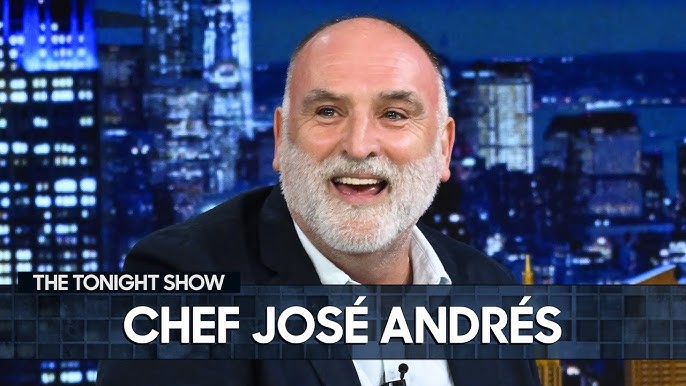

Key Takeaways
- Culinary Innovator: José Andrés is credited with popularizing Spanish tapas and pioneering molecular gastronomy in the United States.
- Global Humanitarian: Through his non-profit, World Central Kitchen, he has provided millions of meals to people affected by natural disasters and crises worldwide.
- Award-Winning Chef: He is a James Beard Award-winning chef with a restaurant group that spans multiple cities and concepts, from fine dining to fast-casual.
- Advocate and Educator: Andrés uses his platform to advocate for food security, immigration reform, and sustainable agriculture.
- Cultural Icon: He has become a globally recognized figure, celebrated not just for his food but for his profound impact on global humanitarian aid.
Introduction to a Culinary and Humanitarian Force
When you hear the name José Andrés, what comes to mind? For many, it’s the image of a world-renowned chef, a man who brought the vibrant flavors of Spanish tapas to the American culinary scene. For others, it’s the picture of a tireless humanitarian, standing amidst the rubble of a natural disaster, organizing teams to feed thousands of hungry people. The truth is, José Andrés is both, and so much more. He has masterfully blended his passion for food with a deep-seated commitment to helping others, creating a legacy that extends far beyond the kitchen. This article explores the journey of José Andrés, from his early days in Spain to his status as a global icon, examining his culinary philosophy, his groundbreaking humanitarian work, and the profound impact he continues to have on the world.
The Early Life and Culinary Roots of José Andrés
Born in Mieres, Asturias, Spain, in 1969, José Andrés was immersed in the world of food from a young age. His parents were a significant influence, and family meals were a cornerstone of his upbringing. This early exposure to the joys of cooking and sharing food ignited a passion that would define his life. At just 15, he enrolled in the Escola de Restauració i Hostalatge de Barcelona, a prestigious culinary school in Barcelona. Here, he honed his skills and absorbed the principles of traditional Spanish and Catalan cuisine. His ambition, however, was already looking beyond tradition. He was eager to push the boundaries of what was possible with food, a desire that would lead him to one of the most innovative kitchens in the world.
An Apprenticeship at elBulli
His quest for innovation led him to an apprenticeship under the legendary chef Ferran Adrià at the famed restaurant, elBulli. This experience was transformative for the young José Andrés. At elBulli, he was at the epicenter of the molecular gastronomy movement, a style of cooking that uses scientific principles to deconstruct and reimagine food. He learned to play with textures, temperatures, and forms, turning classic dishes into avant-garde creations. This period was crucial in shaping his culinary identity, blending his respect for traditional Spanish flavors with a fearless, experimental approach. The techniques he learned at elBulli would become a signature element of his own restaurants in the years to come.
Bringing Spanish Cuisine to America
In 1991, at the age of 21, José Andrés made a bold move across the Atlantic to the United States. After a brief stint in New York City, he was drawn to Washington, D.C., where he was hired to lead the kitchen at a new Spanish restaurant called Jaleo. It was here that José Andrés truly began to make his mark on the American dining scene. At the time, Spanish food in the U.S. was not widely understood beyond a few familiar dishes. Andrés changed that. He introduced the concept of tapas—small, shareable plates—in an authentic and exciting way. Jaleo became a sensation, and José Andrés was celebrated for his vibrant, modern interpretation of his native cuisine. He wasn’t just cooking food; he was sharing his culture, one plate at a time.
The Rise of a Restaurant Empire
Jaleo was just the beginning. Building on its success, José Andrés co-founded the ThinkFoodGroup, a restaurant collective that would grow to include dozens of establishments across the country. His culinary empire is diverse, showcasing his incredible range as a chef. It includes:
- minibar by José Andrés: An exclusive, two-Michelin-starred restaurant offering a multi-course tasting menu that is a masterclass in avant-garde cooking.
- Zaytinya: A celebration of Mediterranean flavors from Turkey, Greece, and Lebanon.
- Oyamel: A tribute to the small plates of Mexico, complete with a famous salt-air margarita.
- The Bazaar by José Andrés: A whimsical and theatrical dining experience with locations in several major cities.
Each restaurant reflects a different facet of his culinary curiosity, yet all are united by a commitment to quality ingredients and a joyful, communal dining experience.
|
Restaurant Concept |
Cuisine Style |
Notable Feature |
|---|---|---|
|
Jaleo |
Spanish Tapas |
The restaurant that launched his American career. |
|
minibar |
Avant-Garde/Molecular Gastronomy |
An intimate, high-end tasting menu experience. |
|
Zaytinya |
Mediterranean (Turkish, Greek, Lebanese) |
Focuses on mezze, or small shared plates. |
|
The Bazaar |
Modern Spanish & Global |
Whimsical presentation and a vibrant atmosphere. |
|
Beefsteak |
Fast-Casual |
Vegetable-forward bowls and salads. |
The Birth of World Central Kitchen (WCK)
While his success as a chef and restaurateur was undeniable, a catastrophic event in 2010 would set José Andrés on a new, world-changing path. Following the devastating earthquake in Haiti, Andrés traveled to the island nation with a simple goal: to cook for those in need. He saw firsthand the logistical failures of traditional disaster relief. Aid was slow, and the food being provided was often culturally inappropriate and lacked dignity. He realized that chefs, with their knowledge of food safety, sanitation, and rapid-response logistics, were uniquely equipped to provide effective food aid. This realization was the seed from which his non-profit, World Central Kitchen (WCK), grew. What started as a small group of chefs cooking in a makeshift kitchen has evolved into a global humanitarian organization.
WCK’s Mission and Impact
The mission of World Central Kitchen is simple but powerful: use the power of food to heal and strengthen communities in times of crisis. The organization operates with a model of speed, flexibility, and empowerment. When disaster strikes—be it a hurricane, wildfire, pandemic, or conflict—WCK is often one of the first on the ground. They don’t just set up large, centralized kitchens; they partner with local chefs, restaurants, and food trucks. This approach not only gets meals to people faster but also injects money back into the local economy, helping communities rebuild. The work of José Andrés and WCK has been nothing short of extraordinary, providing millions of fresh, comforting meals in places like Puerto Rico, Ukraine, Turkey, and even within the United States.
A Chef’s Philosophy: Food as an Agent of Change
For José Andrés, food is much more than just sustenance. It is a universal language that connects us all. He believes that a hot plate of food, served with respect and care, is one of the most fundamental expressions of empathy. It’s a message that says, “We see you, we care about you, and you are not alone.” This philosophy is the driving force behind all his endeavors. Whether he is crafting an exquisite dish in a Michelin-starred restaurant or serving stew from a giant paella pan in a disaster zone, the underlying principle is the same: food has the power to change the world. It can bring joy, build community, and restore dignity.
Accolades and Recognition for José Andrés
The world has taken notice of the incredible work of José Andrés. His contributions to both the culinary arts and humanitarian aid have earned him numerous prestigious awards and honors.
Culinary Awards
He is a multiple-time James Beard Foundation award winner, including “Outstanding Chef” and “Humanitarian of the Year.” Several of his restaurants have earned coveted Michelin stars, a testament to their culinary excellence.
Humanitarian Honors
Perhaps even more significantly, his humanitarian work has been widely celebrated. He was named one of Time magazine’s “100 Most Influential People” in both 2012 and 2018. In 2015, President Barack Obama awarded him the National Humanities Medal, recognizing his work in “cultivating our palates and shaping our culture.” For his work with World Central Kitchen, José Andrés was even nominated for the Nobel Peace Prize. These accolades highlight his unique position as a figure who transcends the culinary world.
A Voice for Advocacy
José Andrés uses his considerable platform to advocate for a range of important issues. He is a vocal proponent of immigration reform, often sharing his own story as a proud immigrant to the United States. He speaks out on the need for food security and sustainable agriculture, arguing that access to good food is a basic human right. During the COVID-19 pandemic, he was a tireless advocate for the struggling restaurant industry, working with the government to create programs that would keep restaurants open while feeding vulnerable populations. His willingness to speak truth to power has made him a respected voice on social and political issues, proving that a chef’s influence can extend far beyond the kitchen. News outlets, including those as diverse as https://britishnewz.co.uk/, have covered his efforts to bring about positive change.
The Future of Food and Philanthropy
What’s next for José Andrés? His restaurant group continues to innovate and expand, bringing his culinary vision to new cities. At the same time, World Central Kitchen is constantly evolving, using technology and data to become even more effective in its disaster response. Andrés is also deeply invested in education, working with universities and institutions to train the next generation of chefs and humanitarians. He envisions a future where food systems are more resilient, equitable, and sustainable. For José Andrés, the work is never done. There are always more people to feed, more communities to support, and more ways to use food as a force for good.
Conclusion: A Legacy of Hope and Paella
José Andrés has redefined what it means to be a chef in the 21st century. He has shown the world that a culinary career can be a platform for immense social impact. From the avant-garde plates of minibar to the millions of meals served by World Central Kitchen, his journey is a testament to the power of a single individual with a bold vision and an unwavering commitment to humanity. He has built more than just restaurants; he has built a movement. It is a movement centered on the simple belief that a plate of food can be a plate of hope. His legacy is one of compassion, innovation, and an unshakeable belief in the good of people. As an immigrant from Spain who became a celebrated American citizen, his story is a powerful reminder of how one person can make a profound difference. You can learn more about his life and extensive work from his detailed biography on sites like Wikipedia.
Frequently Asked Questions (FAQ)
What is José Andrés most famous for?
José Andrés is famous for two primary reasons: his pioneering role in bringing Spanish tapas and avant-garde cuisine to the United States, and his extensive humanitarian work through his non-profit, World Central Kitchen, which provides meals in disaster-stricken areas.
How did World Central Kitchen start?
World Central Kitchen was founded by José Andrés in 2010 after he traveled to Haiti following a devastating earthquake. He saw a need for a more effective and dignified way to feed people in crisis, which led him to create an organization that leverages the skills of chefs for disaster relief.
What kind of food does José Andrés cook?
José Andrés is known for a wide range of culinary styles. He is a master of traditional and modern Spanish cuisine, particularly tapas. He is also a leading figure in molecular gastronomy, creating innovative and experimental dishes. His restaurants feature everything from Spanish and Mediterranean food to Mexican and vegetable-forward concepts.
Has José Andrés won a Nobel Prize?
While José Andrés has been nominated for the Nobel Peace Prize for his humanitarian efforts with World Central Kitchen, he has not won the award to date. However, he has received numerous other prestigious honors, including the National Humanities Medal.
Where are José Andrés’s restaurants located?
The restaurants of José Andrés and his ThinkFoodGroup are located in several major cities across the United States, including Washington, D.C., Las Vegas, Los Angeles, Chicago, and New York City, as well as internationally in locations like the Bahamas.