
Have you ever tried to rub your stomach and pat your head at the same time? It takes a bit of focus, right? Now, imagine trying to do that while also reciting the alphabet backward and juggling three apples. That sounds impossible for a human, but for a modern computer, handling multiple tasks at once is just another Tuesday.
This ability to juggle tasks is often thanks to something called parallel concurrent processing. While it sounds like a mouthful of tech jargon, it is actually a fascinating concept that powers almost everything we do digitally. From playing high-definition video games to simply scrolling through social media on your phone, this technology is working hard behind the scenes.
In this guide, we are going to break down exactly what this means. We will explore how computers think, how they manage their workload, and why this specific method of processing is a total game-changer for speed and efficiency.
What Is Parallel Concurrent Processing?
At its core, parallel concurrent processing is about doing more than one thing at a time, but doing it smartly. To understand it, we first need to break down the two main words: “parallel” and “concurrent.” These terms are often used interchangeably, but in the world of computer science, they mean slightly different things.
Think of a coffee shop. Concurrency is like one barista handling multiple customers. They might take an order from person A, start making the coffee, then take an order from person B while the milk steams, and then hand the coffee to person A. They are dealing with multiple tasks in an overlapping time period. Parallelism, on the other hand, is having two baristas working side-by-side. Barista 1 handles customer A completely, while Barista 2 handles customer B completely at the exact same moment.
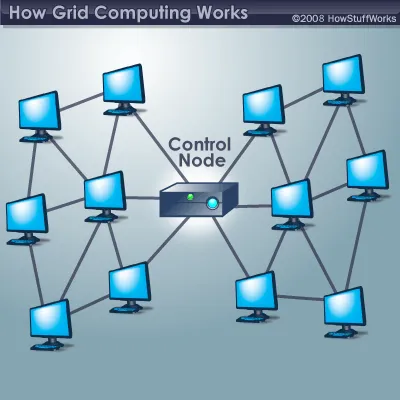
When we talk about parallel concurrent processing, we are often discussing systems that can handle managing multiple tasks (concurrency) and actually executing them simultaneously on different hardware units (parallelism). It is the ultimate productivity hack for computers. Without it, your smartphone would freeze every time you tried to listen to music while checking your email.
The Evolution of Computer Speeds
Computers didn’t always have this superpower. In the early days, computer processors (CPUs) were single-minded. They had one core, which meant they could only do one single instruction at a time. It was like a single-lane highway. If a big truck (a complex task) was on the road, all the little cars (simple tasks) had to wait behind it.
Over time, engineers realized they couldn’t just keep making that single lane faster. The engines were getting too hot and consuming too much power. The solution? Build more lanes. This led to the creation of multi-core processors. Today, even a basic laptop usually has multiple cores, allowing it to utilize parallel concurrent processing to keep traffic moving smoothly.
This shift changed software development forever. Programmers stopped thinking about lists of instructions that run from top to bottom and started thinking about how to break big problems into little pieces that could be solved all at once. It’s like changing from a solo painter to a whole team painting a house together.
Key Differences: Concurrency vs. Parallelism
It is really helpful to visualize the difference between these two concepts because they solve different problems. Concurrency is about structure, while parallelism is about execution.
Concurrency is about dealing with a lot of things at once. It is a way to structure a program so that it can handle multiple tasks that might start, run, and complete in overlapping time periods. It doesn’t necessarily mean they are running at the exact same microsecond.
Parallelism is about doing a lot of things at once. It requires hardware with multiple processing units (like a multi-core CPU). Here, tasks literally run at the same instant.
Table: Concurrency vs. Parallelism at a Glance
|
Feature |
Concurrency |
Parallelism |
|---|---|---|
|
Focus |
Managing multiple tasks |
Executing multiple tasks simultaneously |
|
Goal |
Preventing blocking (waiting) |
Increasing speed (throughput) |
|
Hardware |
Can happen on a single core |
Requires multiple cores |
|
Analogy |
One person juggling 3 balls |
Three people each holding 1 ball |
Understanding this table helps us see why parallel concurrent processing is so powerful. It combines the smart management of concurrency with the raw speed of parallelism.
How Parallel Concurrent Processing Works Inside Your CPU
So, how does the magic happen? Inside your computer, the Central Processing Unit (CPU) is the brain. Modern CPUs are designed specifically to handle parallel concurrent processing. They do this through multiple “cores” and “threads.”
A core is like a physical worker inside the chip. A quad-core processor has four workers. Threads are like virtual pipelines that feed tasks to these workers. Technologies like Hyper-Threading allow a single physical core to handle two threads at once, making it look like there are even more workers available.
When you run a heavy program, like a video editor, the software breaks the work down. One thread might handle the video preview, another handles the audio syncing, and another handles the file saving. The CPU assigns these threads to different cores. Because of this architecture, the computer doesn’t freeze up when one part of the job gets difficult.
The Role of the Operating System
Your hardware is ready to go, but it needs a manager. That manager is the Operating System (OS), like Windows, macOS, or Linux. The OS is the traffic controller for parallel concurrent processing.
The OS decides which program gets to use the CPU and for how long. It uses a scheduler to switch between tasks so quickly that it looks like everything is happening at once. This is called “time-slicing.” Even on a single-core machine, the OS uses concurrency to let you type in a document while music plays.
However, when multiple cores are available, the OS sends different tasks to different cores. This is where true parallelism kicks in. The OS ensures that the resources are shared fairly so that a background update doesn’t slow down your game. It is a constant balancing act that happens millions of times per second.
Why We Need Parallel Concurrent Processing
You might be wondering, “Why does this matter to me?” The answer lies in the sheer amount of data we deal with today. We are no longer just typing text documents. We are streaming 4K video, rendering 3D graphics, and analyzing massive databases.
Without parallel concurrent processing, modern computing would be agonizingly slow. Imagine waiting 10 minutes for a webpage to load because the computer had to finish drawing the images before it could start loading the text.
This technology also saves energy. It is often more efficient to run two cores at a medium speed than one core at a super-high speed. This is crucial for laptops and smartphones, where battery life is king. By spreading the work out, devices stay cooler and last longer on a charge.
Real-World Examples of Parallel Concurrent Processing
Let’s look at some places where this tech shines in everyday life. It isn’t just for supercomputers; it is likely in your pocket right now.
- Web Servers: When you visit a popular news site like British Newz, the server hosting that site is using parallel concurrent processing. It has to serve pages to hundreds or thousands of people at the same time. If it handled visitors one by one, the internet would grind to a halt.
- Video Games: Modern games are incredibly complex. They have to calculate physics (how things fall), AI (how enemies move), and graphics (how things look) all at once. Game developers rely heavily on parallel processing to keep the frame rate smooth.
- Scientific Research: predicting the weather involves crunching billions of numbers. Supercomputers use thousands of processors working in parallel to simulate weather patterns.
Smartphone Performance
Your smartphone is a mini-supercomputer. Mobile processors are designed with parallel concurrent processing in mind. They often have a mix of “performance cores” for heavy tasks like gaming and “efficiency cores” for background tasks like checking emails.
When you take a photo, the phone’s processor is doing incredible work instantly. It adjusts the lighting, focuses the lens, and processes the image data from the sensor simultaneously. If it did these steps one after the other, you would miss the moment. This immediate response is only possible because different parts of the chip are working in parallel.
Challenges in Parallel Concurrent Processing
It isn’t all smooth sailing. Writing software that uses parallel concurrent processing correctly is very difficult. It introduces a whole new set of bugs and problems that programmers have to solve.
One major issue is the “race condition.” This happens when two different tasks try to change the same piece of data at the same time. Imagine two people sharing a bank account. If they both try to withdraw the last $10 at the exact same second, the bank’s system might get confused and give them both money, resulting in a negative balance.
To fix this, programmers use “locks.” A lock stops other tasks from touching data while one task is using it. But this leads to another problem called “deadlock,” where two tasks are waiting for each other to finish, and neither can move. It’s like two polite people standing at a doorway saying, “No, you go first,” forever.
Debugging Difficulties
Fixing broken code is hard enough when it runs in a straight line. When code is running in parallel, it is a nightmare. A bug might only happen once in a thousand runs because it depends on the exact timing of how the processor handles the threads.
Developers have to use special tools to visualize what is happening inside the parallel concurrent processing workflow. They have to track thousands of threads to find the one that is causing the crash. This makes developing high-performance software expensive and time-consuming.
The Future of Processing: Massive Parallelism
We are moving toward an era of massive parallelism. Graphics Processing Units (GPUs) are leading the charge. Unlike a CPU which might have 8 or 16 strong cores, a GPU has thousands of smaller, simpler cores.
Originally designed for gaming, GPUs are now used for Artificial Intelligence (AI) and Machine Learning. AI involves doing a lot of simple math calculations over and over again. This is the perfect job for parallel concurrent processing.
Self-driving cars are another frontier. A car must process data from cameras, radar, and lidar sensors in real-time to avoid accidents. It cannot afford to wait. It needs massive parallel power to make split-second decisions that keep passengers safe.
Tools for Implementing Parallel Processing
If you are interested in coding, you might want to know how developers actually tell a computer to do this. Different programming languages have different tools.
- Python: Uses libraries like
multiprocessingto bypass some of its inherent limitations and achieve parallelism. - Java: Has built-in support for threads and a powerful framework called
Fork/Jointo split tasks up. - C++: Offers low-level control over threads, allowing for maximum performance but with higher complexity.
- Go (Golang): Was built by Google specifically to make parallel concurrent processing easier, using lightweight threads called “Goroutines.”
These tools make it easier for developers to harness the power of multi-core hardware without having to write assembly code manually.
Tips for Developers
- Keep it Simple: Don’t use parallelism if a simple loop is fast enough. It adds complexity.
- Minimize Shared State: Try to make tasks independent so they don’t fight over the same data.
- Use Established Libraries: Don’t try to write your own thread management system unless you absolutely have to.
Key Takeaways
We have covered a lot of ground! Here is a quick summary of the most important points about this technology.
- Concurrency is about managing multiple tasks at once; Parallelism is about executing them simultaneously.
- Parallel concurrent processing combines these concepts to maximize computer efficiency and speed.
- Modern CPUs use multiple cores and threads to handle heavy workloads without freezing.
- This technology powers everything from web servers and video games to the smartphone in your pocket.
- Writing code for parallel systems is difficult due to issues like race conditions and deadlocks.
- The future of tech, including AI and self-driving cars, relies heavily on massive parallelism.
Frequently Asked Questions (FAQ)
Here are some common questions people ask about parallel concurrent processing.
Q: Is parallel processing always faster?
A: Not always. If a task is very small, the time it takes to split it up and manage the threads might take longer than just doing it simply. Parallelism is best for big, heavy tasks.
Q: Can I download more cores for my computer?
A: No, cores are physical hardware inside your CPU chip. To get more cores, you have to buy a new processor or a new computer.
Q: Does my phone use parallel processing when it is asleep?
A: Yes, but at a very low level. Background tasks like syncing emails or checking for updates still use the processor, but they usually run on low-power efficiency cores to save battery.
Q: Is concurrent the same as simultaneous?
A: Not exactly. Concurrent means tasks are in progress at the same time (overlapping), while simultaneous (parallel) means they are actually running at the exact same instant.
Q: Why do my games lag even with a good processor?
A: Lag can be caused by many things, including the graphics card, internet connection, or poor software optimization. Even good parallel concurrent processing can’t fix bad code or a slow internet connection.
Conclusion
Understanding how computers handle work helps us appreciate the technology we use every day. Parallel concurrent processing is the hidden engine that drives the digital world. It allows us to multitask, enjoy rich media, and solve complex scientific problems.
As we move forward, computers won’t just get faster clock speeds; they will get smarter at doing more things at once. Whether you are a gamer, a student, or just someone who hates waiting for apps to load, you benefit from these advancements every single day.
For more deep dives into technical topics and general knowledge, you can always check reliable sources like Wikipedia. Understanding the basics of how our machines think is the first step to mastering the digital age.