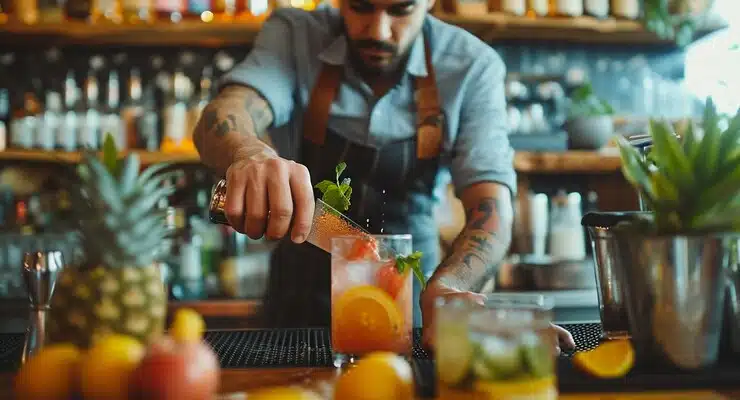

The world of a bartender is often seen through a romantic lens: the clinking of glasses, the lively chatter of patrons, and the effortless grace of someone mixing the perfect drink. While this image holds truth, the profession is a rich tapestry of skill, knowledge, and hospitality. A great bartender is much more than just a drink-maker; they are a host, a confidant, a craftsperson, and the very heart of a bar’s atmosphere. This guide explores the multifaceted world of bartending, from the essential skills required to the career paths available.
Key Takeaways
- A bartender is a skilled professional responsible for preparing and serving beverages, managing inventory, and providing excellent customer service.
- Key skills include mixology knowledge, speed, efficiency, strong communication, and the ability to create a welcoming environment.
- The role has evolved significantly, with modern bartenders often being experts in craft cocktails, spirits history, and flavor pairings.
- Various career paths are available, from working in neighborhood pubs and high-end cocktail lounges to specializing in events or becoming a brand ambassador.
- Success in this field requires a combination of technical ability, a passion for hospitality, and continuous learning.
What Does a Bartender Really Do?
At its core, the job of a bartender is to prepare and serve alcoholic and non-alcoholic beverages to customers. However, this description only scratches the surface. The daily responsibilities are vast and varied, demanding a unique blend of physical stamina and mental agility. A typical day involves much more than standing behind the bar during service hours.
Pre-Service Preparation (Mise en Place)
Long before the first customer arrives, a bartender is hard at work. This preparation, known in the culinary world as mise en place (“everything in its place”), is crucial for a smooth shift.
- Stocking: They restock liquors, wines, beers, and mixers. This includes rotating stock to ensure freshness.
- Garnish Prep: Lemons, limes, and oranges are sliced, olives are prepared, and cherries are stocked. More complex garnishes like dehydrated fruit wheels or herb sprigs are also prepared.
- Syrup and Juice Production: Many quality bars make their own simple syrups, grenadine, and fresh-squeezed juices. This is a key task for a bartender dedicated to quality.
- Bar Setup: The bar station, or “well,” is organized with essential tools, spirits, and mixers for maximum efficiency. Ice bins are filled to the brim.
During Service
This is when the performance begins. A bartender must multitask with precision, handling numerous tasks simultaneously. They take orders, often from multiple guests at once, while also fielding orders from servers for the entire establishment. They must craft each drink to perfection, whether it’s a simple beer pour or a complex, multi-ingredient cocktail. All of this happens while maintaining a clean workspace, engaging with guests, and managing payments.
Post-Service Duties
The work isn’t over when the last customer leaves. A professional bartender is responsible for breaking down their station. This includes cleaning all tools, wiping down surfaces, washing glassware, and taking inventory. This final count helps with ordering for the next day, ensuring the bar is always prepared.
Essential Skills Every Great Bartender Needs
Becoming a successful bartender requires more than just knowing a few drink recipes. It’s a craft that combines technical skills with essential soft skills. Mastering this balance is what separates a good bartender from a great one.
Technical Prowess and Mixology Knowledge
This is the foundation of the craft. A bartender must have a deep understanding of spirits, liqueurs, wines, and beers.
- Recipe Memorization: They need to know hundreds of classic and contemporary cocktail recipes by heart.
- Pouring Skills: Accurately pouring standard measurements (usually 1.5 oz for a spirit) is fundamental for consistency and cost control.
- Technique: Shaking, stirring, straining, and muddling are not just for show. Each technique is used for specific reasons to achieve the right temperature, dilution, and texture in a drink.
Speed and Efficiency
A busy bar can be a high-pressure environment. The ability to work quickly without sacrificing quality is paramount. An efficient bartender develops a sense of rhythm and flow, allowing them to make multiple drinks in a logical sequence, minimizing wasted movement. This “economy of motion” is a skill honed over thousands of hours of practice.
Communication and Hospitality
A bartender is the face of the establishment. They are often the first and last person a guest interacts with.
- Active Listening: They need to listen carefully to a customer’s order and preferences to guide them to a drink they will enjoy.
- Personable Nature: Creating a warm and welcoming atmosphere is key. A friendly smile and genuine conversation can turn a first-time visitor into a regular.
- Problem-Solving: When a customer is unhappy or an issue arises, a skilled bartender can de-escalate the situation calmly and professionally.
Attention to Detail
From the cleanliness of the glassware to the precise placement of a garnish, details matter. A great bartender notices everything. Is a guest’s glass nearly empty? Does the bar top need a wipe? This constant awareness ensures a superior customer experience and a professionally run bar.
The Different Types of Bartending Environments
The title “bartender” can apply to professionals working in a wide range of venues. Each environment offers a unique experience, with different demands and rewards. The type of establishment often dictates the style of service, the drinks menu, and the overall vibe.
The Neighborhood Pub or Dive Bar
This is where many bartenders get their start. The focus here is often on speed and volume. The drink menu is typically straightforward, centered on beer, wine, and simple mixed drinks. The bartender in this setting is a pillar of the community, knowing the regulars by name and their usual orders. The atmosphere is casual, and the relationships built with patrons are a major part of the job’s appeal.
High-Volume Restaurants and Sports Bars
In a busy restaurant or sports bar, the bartender is a crucial part of the service team. They are responsible for making drinks for the entire dining room in addition to serving guests at the bar. Speed and accuracy are critical. They must be able to produce a high volume of consistent drinks quickly while keeping their bar guests happy. This role requires immense multitasking ability and composure under pressure.
The Craft Cocktail Lounge
Here, the bartender is treated as a culinary artist. These establishments focus on classic cocktails, modern creations, and premium spirits. A bartender in a craft lounge is expected to have an encyclopedic knowledge of spirits history, distillation processes, and advanced mixology techniques. They often use house-made syrups, tinctures, and infusions. The service is more methodical and educational, with the bartender guiding guests through a curated menu and sharing the stories behind the drinks.
Hotel and Resort Bars
Working as a bartender in a hotel offers variety. They might work at a lobby bar, a poolside bar, or a fine-dining restaurant within the hotel. The clientele is diverse, ranging from business travelers to vacationing families. Professionalism and a polished demeanor are essential. A hotel bartender must be an ambassador for the hotel, ready to offer recommendations for dining and local attractions.
Event Bartending
Event bartenders work private parties, weddings, corporate functions, and festivals. This role offers flexibility and variety, as the venue and guest list change with each event. An event bartender needs to be highly organized and adaptable. They are often responsible for setting up a temporary bar, managing a specific inventory for the event, and delivering excellent service in a new environment every time.
Tools of the Trade: The Bartender’s Toolkit
Every craft has its tools, and for a bartender, these instruments are extensions of their hands. While a bar might have a wide array of fancy gadgets, a few core tools are essential for making the vast majority of cocktails.
|
Tool Name |
Primary Use |
Why It’s Essential |
|---|---|---|
|
Shaker |
Chilling and diluting cocktails |
A two-piece shaker (Boston shaker) is preferred by professionals for its better seal and versatility. |
|
Jigger |
Measuring ingredients |
Ensures consistency and proper proportions in every drink. Crucial for flavor balance and cost control. |
|
Bar Spoon |
Stirring cocktails and layering drinks |
Its long, twisted handle allows for smooth stirring without over-aerating the drink. |
|
Strainer |
Separating ice from the liquid |
A Hawthorne strainer is used with shakers, while a Julep strainer is for mixing glasses. |
|
Muddler |
Mashing fruits, herbs, and sugar |
Extracts flavors and oils from fresh ingredients for cocktails like the Mojito and Old Fashioned. |
|
Pour Spout |
Controlling the flow of liquid |
Allows for a clean, consistent pour from liquor bottles, preventing spills and enabling accuracy. |
The Evolution of the Modern Bartender
The role of the bartender has undergone a dramatic transformation over the past few decades. The “bartender” of the 1980s and 90s was often associated with flair bartending (think bottle-flipping) and serving brightly colored, sweet drinks. While that style still exists, the modern era has seen a renaissance of classic mixology and a focus on quality ingredients.
This shift, often called the “craft cocktail movement,” has elevated the profession. Today’s career bartender is respected as a skilled professional, much like a chef. They study obscure historical recipes, experiment with molecular mixology, and travel the world to learn about different spirits. Many top bartenders have become minor celebrities in the food and beverage world, with some even writing books and opening their own highly acclaimed bars. This evolution has made being a bartender a more viable and respected long-term career path.
For those looking for insights into different professions and lifestyle trends, resources like https://britishnewz.co.uk/ can offer interesting perspectives on how various jobs are portrayed in modern culture.
Is a Bartending Career Right for You?
A career as a bartender can be incredibly rewarding, but it’s not for everyone. It requires a specific personality and a genuine passion for the craft. The job is physically demanding, involving long hours on your feet, late nights, and heavy lifting. It’s also emotionally demanding, as you must remain positive and engaging even during stressful rushes or when dealing with difficult customers.
However, for the right person, the benefits are immense. It’s a social and dynamic job where no two days are the same. There is a creative element in crafting drinks and a deep satisfaction in making someone’s day a little better. The skills you learn as a bartender—communication, grace under pressure, and efficiency—are transferable to any field. As you can see from the extensive history and culture surrounding the profession, being a bartender is more than a job; for many, it’s a calling. For a broader understanding of the cultural impact of various professions, one can refer to the extensive information available on platforms like Wikipedia, which details the historical and modern context of the role.
Frequently Asked Questions (FAQ)
Q1: Do I need to go to bartending school to become a bartender?
A: While bartending school can teach you the basics, it is not a requirement. Many of the best bartenders learn on the job, starting as a barback (a bartender’s assistant) and working their way up. Real-world experience in a busy environment is often considered more valuable.
Q2: How much can a bartender earn?
A: A bartender‘s income can vary greatly depending on the location, type of establishment, and their skill level. It is typically a combination of an hourly wage and tips. In a high-volume restaurant or upscale cocktail bar in a major city, a talented bartender can earn a very good living.
Q3: What is the hardest part of being a bartender?
A: Many bartenders would agree that the most challenging aspect is the physical and mental stamina required. The long hours, late nights, and constant pressure to be “on” for guests can be draining. Managing difficult customers and maintaining composure in stressful situations is also a significant challenge.
Q4: What’s the difference between a bartender and a mixologist?
A: The terms are often used interchangeably, but there can be a distinction. All mixologists are bartenders, but not every bartender identifies as a mixologist. A “mixologist” is a term that emphasizes the craft, history, and culinary artistry of creating cocktails. A bartender is a broader term for the professional who serves drinks and manages a bar, with hospitality as a primary focus.
Q5: What are the first steps to becoming a bartender with no experience?
A: The best route is to get a job in a restaurant or bar in a supporting role. Start as a host, busser, or server’s assistant. Show a strong work ethic and an interest in the bar. The most common entry point is to become a barback, where you will support the bartenders by stocking, cleaning, and preparing ingredients, learning the trade from the inside out.